TMT BreakoutCodex · 实盘重复把握 5/10
北京时间·🕒 发布 20:38:10时区推断·⟳ 抓取 20:44:14·⚡ 决策 07-29 20:51:46 +7m32s·89.8 天前
希捷财报和指引大幅超预期,AI近线硬盘定价与毛利率继续上修
希捷(STX.US)FQ4收入36.29亿美元、调整后EPS 5.71美元,FQ1指引收入41亿美元、EPS 7.30美元,均明显高于市场预期。
📄 原文TMT Breakout↗ 原文
TMTB Morning Wrap
Good morning. Futures slightly red, rates slightly up and Crude +6.5% ahead of the Fed later this afternoon as some Ira…
▼ 亏 -3.41%入场 07-28 盘后首笔 @811.95 → 离场 07-29 常规开盘 @786.85
决策后走势暂无图(这条腿还没有复盘打分的日线切片)
💡 交易逻辑财报指引大超预期,限涨幅做AI HDD盈利兑现
怎么买 限价买入 不高于昨收 +6%、仅下一个交易日,不成交作废
怎么卖 止盈 +4%(半仓)/+8%(清仓) · 止损 -5% · 时间止损 3日
不做 西部数据(WDC.US)
西部数据(WDC.US)受益于同业景气验证,但不是本次财报披露主体,且近期同样剧烈回撤,缺少自身新增超预期数据,优先不做同业扩散腿。
展开详情(成交明细 / 研究档案 / 原文全文 / 决策记录链)
分时走势
做多 STX.US 希捷科技
建仓日早于近 30 天,只有日线图
成交明细 · 纸面
做多 STX.US 希捷科技
| 收益状态 | -3.41% 已平仓 |
|---|---|
| 进场成交 | 2026-07-28 · 盘后首笔 · 07-29 04:14 北京 · @811.95 |
| 离场成交 | 2026-07-29 · 常规开盘 · @786.85 |
| 毛收益 | -3.09% |
| 成本 | +0.32% |
| 净收益 | -3.41% |
| 计入收益 | -3.41% |
| 计入 | 同日重复,不计入曲线 |
| 建仓日 | 2026-07-28 · 进场不早于新闻时刻 + 2 分钟 |
收益口径 event_time_plus_2min_10min_walk_open_topup_to_next_open_exchange_calendar_fill_model_local_notional_v9 · method_id m8db1cbc8f2d · 截至 2026-10-27 15:33
研究档案
消息传播链
- 希捷在美股盘后披露FQ4 FY2026财报和FQ1 FY2027指引,属于一手财报催化。市场反应:盘后和盘前同向上涨。
- 媒体确认收入、调整后EPS和下一季指引均超预期,并强调AI存储需求造成供应紧张和价格上行。市场反应:市场继续按利好交易。
- 报道显示STX.US盘前约786.01美元,较权威前收747.30美元上涨约5.2%,事件已被定价但未到不可追的一字式状态。市场反应:盘前约+5%。
关键理由
- 希捷(STX.US)FQ4收入36.29亿美元、调整后EPS 5.71美元,FQ1指引收入41亿美元、EPS 7.30美元,均明显高于市场预期。
- 9月季隐含毛利率约57%高于FQ4的52.7%,说明AI近线HDD供需紧张已继续转化为价格、成本和利润率超预期。
- 真实先例显示同类AI硬件财报次日常见高开低走,但对齐样本+3日胜率约67%、中位约+2.8%,支持只用小仓在盘前涨幅受控时参与。
主要风险
- STX.US最新权威快照显示过去20日已下跌22.84%、20日波动率约5.91%,说明筹码和波动很极端,财报后可能先冲高再派发。
- 对齐先例+1日中位为-1.9%、+5日中位接近0,若开盘涨幅超过约6%后再追,胜率和收益空间会明显恶化。
反向证据
- 做多前查反向 · 来源 web · 日期 2026-07-29 · 影响 weakens
未发现足以否定本次财报利好的新增公司级利空;主要反证是AI交易拥挤、峰值毛利率和HAMR执行风险。
检索:Seagate stock downgrade risk peak margins HAMR execution July 2026 earnings 原文 ↗ - 做多前查反向 · 来源 stock_quote · 日期 2026-07-28 · 影响 weakens
权威快照显示STX.US过去20日下跌22.84%、距52周高点约34.7%,事件前是剧烈回撤而非同向抢跑,但短线波动和开盘低走风险高。
检索:STX authoritative current snapshot 20d drawdown high open low close risk
历史先例(按相似度)
- 相似度 10/10 STX 2026-04-28 Seagate FQ3 2026 after-close results exceeded guidance high end, record margin and FQ4 guide $3.45B revenue/$5 EPS, mana 原文 ↗
事件后 +1日 +11.1% · +2日 +16.3% · +3日 +25.5% · +4日 +27.6% · +5日 +33.2%
相似度依据:同公司、同市场、同为AI近线HDD需求与定价兑现后的财报/指引超预期,催化相位几乎一致。 - 相似度 9/10 STX 2025-07-29 Seagate FQ4/FY2025 after-close results: revenue $2.44B、non-GAAP EPS $2.59、record gross margin and FQ1 2026 guide $2.50B/ 原文 ↗
事件后 +1日 -3.5% · +2日 +2.8% · +3日 +1.4% · +4日 +1.4% · +5日 -0.6%
相似度依据:同公司同市场同财报相位,AI mass-capacity HDD周期开始兑现,但超预期强度和当前可能不同。 - 相似度 9/10 WDC 2026-04-30 Western Digital Q3FY26 after-close results: revenue +45% YoY, non-GAAP gross margin 50.5%, Q4 revenue +36%-44% YoY and E 原文 ↗
事件后 +1日 -0.7% · +2日 +1.8% · +3日 +7.1% · +4日 +11.2% · +5日 +6.8%
相似度依据:同为美国HDD双寡头、同财报指引相位、同AI工作负载带动高容量HDD需求,最接近的同机制可比。 - 相似度 8/10 WDC 2026-01-29 Western Digital Q2FY26 after-close results: revenue +25% YoY, margin expansion, Q3 revenue expected about +40% YoY; CEO 原文 ↗
事件后 +1日 -10.1% · +2日 -2.9% · +3日 +4.2% · +4日 -3.2% · +5日 -6.5%
相似度依据:同为HDD供给/定价周期的美国可交易同行,但当日反应显示强预期下也可能先派发。 - 相似度 6/10 MU 2025-06-25 Micron FQ3 2025 after-close results: record revenue, HBM revenue nearly +50% QoQ, data-center revenue more than doubled, 原文 ↗
事件后 +1日 -1.0% · +2日 -2.0% · +3日 -3.1% · +4日 -5.0% · +5日 -4.3%
相似度依据:同为AI数据中心存储/内存景气兑现的美国财报超预期,但品类是DRAM/HBM而非HDD。 - 相似度 6/10 MU 2025-09-23 Micron FQ4/FY2025 after-close results: record revenue driven by AI data-center growth and guided sequential revenue grow 原文 ↗
事件后 +1日 -2.8% · +2日 -5.8% · +3日 -5.5% · +4日 -1.5% · +5日 +0.6%
相似度依据:同市场同AI存储盈利兑现财报相位,但受内存周期和HBM预期影响更大。 - 相似度 5/10 992 2024-05-23 Lenovo FY2023/24 Q4/full-year results: Q4 revenue returned to growth, net profit doubled, non-PC share near 45%, company 原文 ↗
事件后 +1日 -2.5% · +2日 +6.8% · +3日 +4.7% · +4日 +2.8% · +5日 +1.9%
相似度依据:跨市场AI硬件/服务器财报兑现可类比需求方向,但公司是PC/服务器综合硬件而非HDD定价。 - 相似度 5/10 992 2024-08-15 Lenovo FY2024/25 Q1 results: revenue +20%, adjusted net profit +65%, all businesses improved profitability and highlight 原文 ↗
事件后 +1日 -3.6% · +2日 -3.9% · +3日 -6.2% · +4日 -7.8% · +5日 -4.7%
相似度依据:跨市场AI基础设施/硬件需求财报兑现,但业务结构与HDD价格弹性差异较大。 - 相似度 5/10 000977 2024-10-15 浪潮信息2024年前三季度业绩预告:预计归母净利12.5亿-13.5亿元、同比增长61.34%-74.24%,下游智能算力基础设施需求高景气;event_study +1/+3/+5日为-2.1%/+3.9%/+3.6%。 原文 ↗
事件后 +1日 -2.1% · +2日 -0.4% · +3日 +3.9% · +4日 +4.4% · +5日 +3.6%
相似度依据:同为AI基础设施高景气带来的业绩预告,但A股服务器供应商与美国HDD制造商机制不同。 - 相似度 5/10 000977 2026-07-08 浪潮信息2026年中报业绩预告:预计归母净利26亿-31亿元、同比增长226%-288%,金额和市值量级较大;event_study +1/+3/+5日为+10.0%/+9.4%/+8.3%。 原文 ↗
事件后 +1日 +10.0% · +2日 +14.5% · +3日 +9.4% · +4日 +8.7% · +5日 +8.3%
相似度依据:AI基础设施业绩预告强度和量级较大,但跨市场且不是HDD价格兑现。
原文全文
展开原文 · 37,668 字
Good morning. Futures slightly red, rates slightly up and Crude +6.5% ahead of the Fed later this afternoon as some Iran launched missiles at a base in Jordan, the first such attack since Trump suspended strikes on Iran on Friday. **Semis -1%** weaker early while **software/internet** are flat. Overnight, KOSPI down another 6% and now down 45% since peak and hitting 200d. What a ride. Hynix finished down 5% after missing OPs estimates. What a ride.
Lots of earnings to go through. We’ll cover **STX, Hynix, KLAC, NXPI, VRT, and CTSH** then the usual below that. We’ll put our recap of BE in the slack since we’re running out of time here…
**META** and **MSFT** tonight among others. We’ll have some bogeys out shortly.

Let’s get straight to it…

# **EARNINGS**
### **STX +4%: Big beat-and-raise, with pricing, mix and HAMR cost-downs driving a much larger-than-expected margin step-up, while demand visibility extended into CY28 and customer planning moved into CY29+**
Overall very solid print with the highlight the implied mid 57s September GM guide. We know what kind of tape we’re in but numbers objectively good and mgmt did good job talking up visibility/pricing/incremental margins. Will be interesting to see how it goes today.
### **The #s:**
-
**FQ4’26 revenue **was $3.629B, +48.5% y/y (last q +44.1% y/y) vs Street $3.49B, +~42.8%; non-GAAP EPS was $5.71 vs Street $5.08-$5.10; GM was 52.7% vs ~50.3%; and OM was 44.6% vs ~42.0%.
-
**FQ1’27 guidance **was $4.10B revenue, +56.0% y/y vs Street $3.78-$3.79B, and EPS of $7.30 vs Street $5.80-$5.85 and a roughly $7.00 buyside bogey. Implied September GM of ~57.3%-57.5%…The magnitude of the EPS upside came from the combination of another pricing increase, a higher-capacity product mix, HAMR cost-downs and opex remaining near $300M despite 13% sequential revenue growth
### **Key Takeaways:**
-
**Pricing**: Nearline pricing increased roughly 10% y/y, accelerating from approximately 6% last quarter, while Edge pricing increased roughly 35% y/y. Mgmt said the supply-demand gap has widened, and any incremental exabytes produced above contracted volumes are being sold at prices above the original contract price. The favorable pricing expiration for one early HAMR customer was only a small contributor to the September improvement, with broader demand and customers chasing incremental volume the more important drivers.
-
**GMs:** GM reached 52.7%, +570bps q/q and nearly 15 points y/y, while the September guide implies ~57.3%-57.5%. Estimated incremental GM was roughly 87% in June and 93% in September, far above the 50% framework previously discussed. Pricing, cost per TB declining by roughly 16% y/y, higher-capacity drives and limited opex growth are translating revenue upside almost directly into earnings. Mgmt said GM should improve sequentially through FY27 and that incremental GM is already well above 60%, but explicitly declined to identify a ceiling.
-
**Visibility**: Approximately 90% of exabytes now ship into data centers, the vast majority of nearline supply is allocated into CY28, and customers are discussing CY29 and beyond. Product configurations and pricing are already contracted through the entirety of CY27. Mgmt said cloud exabyte demand has increased sequentially for three years with “no evidence of a slowdown,” while enterprise nearline revenue increased for a fifth consecutive quarter.
-
**Demand**: Mgmt argued that inference and agentic workloads create and retain more context, with tiered KV-cache architectures allowing HDDs to hold persistent data and reduce repeated GPU computation. Neoclouds, leading model developers and enterprises are also starting to adopt hyperscaler-style tiered architectures. However, mgmt repeatedly characterized agentic KV-cache and physical-AI demand as “very early days,” and said the ultimate HDD attach rate will vary significantly by application.
-
**HAMR: **HAMR represented approximately 40% of nearline exabytes exiting FY26. Mozaic 3 is qualified across all major cloud customers, Mozaic 4 is ramping at the two largest global CSPs and should represent 50% of HAMR exabytes exiting CY26, while Mozaic 5 qualification shipments remain targeted for late CY27. Mozaic 4 was already a meaningful contributor in June and is expected to contribute more in September.
-
**Capital Return:** FCF was $1.118B, a 31% margin and the best quarterly result in more than a decade. Gross debt declined to $3.6B, STX plans to retire another $1.2B during the September quarter, and buybacks are already running above the June-quarter level. Once the remaining targeted debt is addressed, mgmt expects most excess FCF to be returned through repurchases and dividends.
### **Bull vs. Bear Debate**
**The structural bull case** is that STX is no longer simply a cyclical PC-HDD vendor. The business is becoming a concentrated provider of mass-capacity storage into a rational cloud-HDD market, where HDD remains dramatically less expensive than NAND for bulk storage. Approximately 90% of exabytes already ship into data centers, HDD represents a relatively small portion of total hyperscaler capex, and AI is increasing the amount of data that is created, retained, duplicated and reused. Bulls argue that this makes storage demand more durable than compute capex alone, particularly as inference, agentic AI, video and physical AI increase persistent context and unstructured-data requirements. Bulls like bisibility and supply discipline: the vast majority of nearline exabytes are allocated into CY28, pricing and product configurations are contracted through CY27, and customers are already discussing CY29+ with most checks showing $25-$30/TB already in CY27 which implies $70+ in EPS power. STX is keeping drive-unit output broadly stable and using areal-density gains to increase exabytes, which limits industry oversupply while allowing incremental production to be sold above contracted prices. Bulls therefore believe that the traditional HDD cycle has structurally changed: rather than price per TB falling every year, the industry can capture part of the value created by higher-capacity products while HAMR lowers cost per TB.
This quarter the September guide cleared the buyside bogey, Edge pricing showed the same positive inflection as nearline, incremental GM approached 90%, and Mozaic 4 is now contributing meaningfully. Opex remains near $300M even as revenue approaches $4.1B, creating unusually high earnings leverage. With debt rapidly declining, the next leg of FCF can increasingly fund buybacks, allowing EPS to grow faster than operating profit. Bulls will say this should trade at least mid teens multiple and with pricing reaching $30/TB by 2028, you can get $100+ in EPS power = a $1,500 stock.
**The bear case** is that the market may be capitalizing peak pricing and peak incremental margins as though they are permanent. Customer commitments reduce near-term miss risk, but they do not eliminate a CY28 or CY29 cloud-capex slowdown. If hyperscaler infrastructure spending moderates, open-source models reduce the capital intensity of AI, DC construction encounters power or financing constraints, or customers eventually discover they have accumulated too much storage capacity, pricing can flatten before unit demand visibly falls. The same customer concentration that provides visibility can create a sharp correction when LTAs eventually roll off.
There are also technology and competitive risks. STX must pause or slow parts of its factories during transitions from 3TB to 4TB and eventually 5TB per disk, while yields, qualification timing and more complex head-and-media processing can temporarily constrain output or raise costs. Mgmt also acknowledged that areal-density transitions alone may not be sufficient to meet all longer-term demand. A slower Mozaic ramp would remove both the expected capacity benefit and part of the cost-down benefit. Beyond HAMR execution, a return to NAND deflation could improve SSD economics, WDC or Toshiba could become more aggressive, and weaker Edge or consumer markets could expose fixed-cost leverage. The margin debate is particularly important because the September guide has already moved GM close to 60%. If pricing normalizes while costs continue declining at only the historical low-to-mid-teens rate, incremental GM could fall sharply from the current 80%-90% level. Opex leverage would still be favorable, but the market would begin treating STX as a late-cycle hardware company again.
### **SKHY -2%: Hynix results ok as OP expectations had already come down in Asia give mgmt setting expectations lower, but the quarter was also modest quality miss as DRAM ASP and product mix lagged buyside expects; HBM4, LTAs and continued AI-memory tightness support a stronger 2H setup.**
**Revenue** was ₩79.319tn, +257% y/y (last q +198% y/y) vs Street at₩79.964tn+~279% y/y, while OP was ₩60.543tn, +557% y/y vs Street at ₩64.986tn, +~605% y/y; OPM was 76.3% vs 77.1%. A lot of discussion where real bogey was - I couldn’t get a sense before the print, but remember that mgmt was out trying to massage expectations down a few weeks ago so many already expected the OP miss:

DRAM ASP of only +~30% q/q vs a higher-end +40%+ expectation. NAND was stronger, with bits +mid-teens and ASP +mid-50s; eSSD revenue doubled q/q and 30TB+ eSSD revenue more than tripled. For 3Q, mgmt guided DRAM bits +~10% q/q and NAND bits up low-single digits; no formal P&L guide was provided, while Street is at ₩105.0tn revenue, ₩83.0tn OP and 79.0% OPM.
Mixed feedback from investors on the call especially around Samsung production plans, and some pointing to fact they can’t accelerate buybacks due to ADR listing until next year. They did say 2H pricing should be better as Q2 impacted by some pushouts of higher value products. Overall, seems fine especially given stock down 40% from peak already.
### **Key Takeaways:**
-
**DRAM:** Blended DRAM ASP rose only ~30% q/q versus a higher-end expectation of +42.6%, despite conventional DRAM pricing remaining strong. The shortfall reflected higher exposure to lower-priced mobile DRAM, some fixed LTA pricing, legacy HBM3E mix and higher-value HBM4 shipments landing later in the quarter.
-
**2H improves:** HBM4 entered mass production in 2Q, with a full ramp planned for 2H, while HBM4 yield and quality are already nearing mature HBM3E levels. Mgmt expects HBM4, 1c conventional DRAM and a greater contribution from higher-value products to drive higher 2H bit growth, blended ASP and earnings.
-
**Demand**: More efficient models and data-center leasing were characterized as signs of higher infrastructure utilization and faster monetization, not weaker investment. Mgmt expects CSP AI spending to remain solid beyond next year, although individual projects can move because of power availability and data-center construction constraints. Demand is broadening from HBM into server DRAM, LPDDR/SOCAMM and high-capacity NAND as agentic AI and inference expand.
-
Major customers continue requesting more memory, and mgmt sees 2026 DRAM and NAND demand growing mid-20% and high-teens, respectively. PC and mobile are seeing temporary sales adjustments because customers cannot secure enough memory, rather than because of an underlying demand collapse. Advanced-node complexity and long fab lead times make a meaningful near-term supply-demand improvement unlikely.
-
**Capex**: 2026 capex is expected in the high-₩40tn range, with M15X production pulled forward and Yongin Fab 1 capacity expansion accelerated. New packaging and NAND investments will be phased based on confirmed customer demand and investment efficiency. This supports the bull case on sustained shortages, but it also increases the bear debate around eventual 2027-29 supply normalization
-
**LTAs: **SKHY has completed negotiations with around 10 customers, with additional discussions underway. Contracts are typically around five years and can include volume commitments, variable pricing mechanisms and deposits, improving demand and investment visibility
-
**NAND**: eSSD revenue doubled q/q, with revenue from 30TB+ products rising more than threefold. Mgmt sees NAND becoming a core component of the AI memory hierarchy as inference, KV-cache offloading, near-GPU storage and AI data lakes require a mix of high-performance TLC, high-capacity QLC and SLC-mode products.
### **Bull vs Bear Debate**
**The core bull thesis** is that AI has permanently changed the size, mix and cyclicality of the memory market. AI demand is no longer confined to HBM for training accelerators. Agentic AI and inference require more conventional server DRAM, LPDDR/SOCAMM for CPU and accelerator nodes, and high-capacity NAND for KV cache, near-GPU storage and data retention. At the same time, nearly all incremental DRAM wafer capacity is being directed toward HBM, while limited non-China NAND capacity is being added. That combination could keep supply tight even as capex rises.
The SKHY-specific bull case is that it retains a differentiated execution moat rather than simply participating in a commodity upcycle. HBM4 entered mass production in 2Q, yields and quality are already approaching mature HBM3E levels, HBM4E is on track for 2027 and mgmt is developing next-generation packaging and cooling technology. The quarter also provided evidence of demand broadening into NAND, with eSSD revenue doubling q/q. Around 10 multiyear LTAs, generally structured around five-year terms with commitments and deposits, should make demand, capex and cash flow more visible. If those agreements reduce downside volatility without materially limiting HBM pricing, SKHY can earn a structurally higher ROE and deserves a higher multiple than a traditional peak-cycle memory stock.
The balance sheet and capital-return opportunity further strengthen the bull case. SKHY has moved into a substantial net-cash position and expects to disclose additional shareholder returns this year. Some estimates anticipate hundreds of trillions of won of FCF through 2028 and eventual use of both dividends and buybacks. A credible recurring buyback would help close the gap between strong earnings generation and the low multiple currently assigned to those earnings.
### **NXPI -3%: Clean but modest beat-and-raise, with Q2 revenue and EPS above Street and Q3 revenue and EPS guided ahead, but Auto was roughly in line and Q3 gross margin was slightly below Street**
Relatively unexciting print that won’t change narrative…
### **The #s:**
-
**Q2 revenue** was $3.496B, +19.5% y/y (last q +12.2% y/y) vs Street $3.463B, +18.4%, while non-GAAP EPS was $3.61 vs Street $3.54. Gross margin was in line at 58.0%, while operating margin beat by 40 bps at 35.1%.
-
**Q3 revenue** was guided to $3.750B, +18.2% y/y and +7.3% q/q, vs Street $3.706B, +16.8%, while EPS was guided to $4.11 vs Street $4.01. Gross margin of 58.5% was 10 bps below Street, but operating margin of 36.9% was roughly 60 bps above.
-
Industrial & IoT and Communications Infrastructure drove most of the upside, while Auto and Mobile were only slightly above Street. Demand indicators nevertheless improved meaningfully, with growing backlog, book-to-bill above 1, longer lead times, doubled customer escalations, and visibility extending into Q4 and Q1’27
### **Key Takeaways:**
-
**Demand: **Mgmt said the setup was better than 90 days ago, with backlog building across the next three quarters, an 18-month demand signal, distribution backlog improving, book-to-bill above 1 and higher q/q, late orders continuing to rise, and customer escalations doubling q/q. Lead times have moved beyond 16 weeks across a larger portion of the portfolio, while Q3 assumes all regions and end markets grow sequentially.
-
**GMs:** Q3 gross margin is guided 50 bps higher q/q as utilization moves from the low-80% range toward the mid-80% range. Mgmt reiterated that roughly $1B of incremental annual revenue should add about 100 bps to gross margin and maintained confidence in the approximately 60% CY27 framework. The longer-term VSMC and factory-consolidation benefits offer roughly 200 bps of structural upside, but those benefits are mainly a 2028-29 event
-
**Auto**: Auto revenue was $1.938B, +12.1% y/y and +17% excluding the MEMS disposal, in lineish . Company-specific Auto drivers grew 22% y/y and reached 47% of segment revenue, led by SDV, electrification, and connectivity. Mgmt was emphatic that Western Tier-1 customers remain hand-to-mouth and are not restocking, meaning current growth is coming from content rather than inventory replenishment. Bulls see better revenue quality and future restocking upside; bears see less evidence of a broad cyclical Auto recovery.
-
**Industrial: **Industrial & IoT revenue was $755M, +38.3% y/y vs Street $744M, with new i.MX, RT, and MCX products growing approximately 40% and core Industrial also recovering strongly. Communications Infrastructure was $452M, +41.3% y/y vs Street $437M, driven by data-center networking and RFID.
-
**Physical AI:** AI-enabled processors are expected to represent approximately 15% of Industrial & IoT processor revenue in 2026, more than doubling y/y. The Kinara-related funnel rose to more than $1.5B from more than $1B last quarter and now spans over 200 customers. Mgmt characterized AI as becoming a required component of new edge-system design discussions, but explicitly acknowledged that the funnel must still convert into design wins
-
**DC: ** Mgmt reiterated more than $500M of 2026 revenue vs approximately $200M in 2025, with exposure to top-of-rack and SmartNIC control as well as processors that manage power, cooling, monitoring, security, and uptime within the rack. Still only roughly 3.5% of 2026 revenue, well below the AI DC mix of other analogs.
### **Bull vs. Bear Debate**
**The core bull argument** is that NXPI is increasingly a structural content-growth company rather than simply a leveraged play on Auto and Industrial unit cycles. This quarter strengthened that case. Auto grew 17% y/y excluding MEMS even though mgmt saw no restocking, and company-specific Auto drivers grew 22% to reach 47% of segment revenue. SDV is the fastest-growing part of that portfolio, while the S32N and S32K5 product families remain in the design-win phase and have not begun material production ramps. If those platforms convert as expected, NXPI can continue growing Auto revenue faster than vehicle production through higher processing, networking, security, radar, and electrification content per vehicle.
The bull case also now has broader support outside Auto. Industrial & IoT grew 38%, with both the new processing portfolio and the core franchise expanding strongly. Data-center revenue is expected to rise from approximately $200M in 2025 to more than $500M in 2026, while the physical-AI funnel expanded by approximately $500M q/q to more than $1.5B across over 200 customers. At the same time, backlog, lead times, book-to-bill, late orders, and customer escalations all improved. The absence of restocking can actually be viewed positively because it suggests existing growth is tied to real end demand and content, while any future inventory normalization remains an additional source of upside. The margin and cash-flow setup adds operating leverage. Utilization is moving toward the mid-80% range, every incremental $1B of revenue should contribute approximately 100 bps of gross margin, and lower-cost JV capacity and factory consolidation can add another roughly 200 bps structurally over time. Bulls can therefore underwrite faster EPS growth than revenue growth while NXPI’s capital intensity normalizes and JV funding requirements decline.
**The bear argument** starts with the fact that the q did not produce the magnitude of upside expected from a stock trading on an analog recovery and content-growth narrative. Q2 revenue was only approximately 1% above Street, Q3 revenue was inl ine, and Q3 gross margin was slightly below Street. Auto, the largest segment, was essentially in line with expectations, while the sequential guide was not materially better than normal seasonality. Bulls looking for an accelerated cyclical recovery, restocking, or a larger upward revision to CY27 estimates did not receive it.
Bears also argue that the newer AI businesses are not yet large enough to offset the risks in the core portfolio. DC is growing rapidly but represents only around 3.5% of 2026 sales, materially below the 10% to 20% AI data-center exposure of several peers. The $1.5B physical-AI funnel is an engagement pipeline, not booked revenue, and mgmt explicitly said it still must convert into design wins. Industrial programs may take 18 to 24 months to generate revenue after a win, while Auto programs generally take even longer. Meanwhile, NXPI remains heavily exposed to global Auto demand, Mobile is turning negative y/y due partly to memory constraints, and pricing is currently offsetting inflation rather than adding meaningful incremental margin.
There are also questions about the quality and timing of the margin story. Utilization can lift gross margin toward 60%, but foundry and access-fee inflation becomes more relevant in 2027, and the larger structural JV benefit is mainly a 2028-29 event. DCD margins in the low-20% range remain below several analog peers at 30% to 35%, limiting the case for a peer-level multiple before JV spending declines and cash conversion improves.
### **KLAC -8%: Solid but modest beat-and-raise with a meaningfully stronger 2H26/CY27 setup, but print didn’t clear elevated bogeys as Q4/Q1 revs a touch light of expects and bulls wanted better pricing commentary. Buyside EPS coming down MSD.**
### **The #s:**
-
**F4Q26:** Revenue $3.658B, +15.2% y/y (last q +11.5% y/y) vs Street $3.600B although a bit light of buyside at $3.7B, +~13.4%; non-GAAP EPS $1.05 vs Street $1.00; non-GAAP GM 62.4% vs Street 61.9%.
-
**F1Q27 guide:** Revenue $4.00B, +24.6% y/y vs Street ~$3.94B and buyside hoping for $4B+, +~22.8%; EPS $1.16 vs Street ~$1.10-$1.14; GM 62.5% vs Street ~62.1%.
-
Mgmt expects 2H26 revenue to rise ~20% versus 1H26, implying Dec-Q revenue of roughly $4.49B, +~36% y/y versus Street around $4.3-$4.4B. CY26 WFE was raised to the low-$150B range, while CY27 is framed around ~$190B vs buyside expectations closer to $200B. Mgmt said first-half shipments were constrained by long-lead components rather than customer demand, and those constraints are easing.
### **Key Takeaways:**
-
**Demand**: Mgmt said AI infrastructure demand signals have “strengthened materially” since the March Investor Day, supported by accelerating hyperscale data-center investment, rising AI compute requirements and a robust design environment. Customer schedules are holding, greenfield projects are progressing, and customers are accelerating delivery requests. KLAC did not discuss conventional enterprise IT budgets directly; the relevant IT-spend signal was hyperscaler and AI infrastructure capex, which remains very strong.
-
**Margins:** GM of 62.4% exceeded Street despite tariff and memory-cost pressure, and the 62.5% September guide was also above Street. However, the memory-component headwind is now slightly greater than 100 bps and is expected to persist through CY27. Mgmt generally does not reopen previously booked orders or impose retroactive surcharges; most pricing capture comes with new products and variants. A bit of disappointment for bulls expecting broad 10%-15% like-for-like equipment-price increase
-
CY26 WFE, including advanced packaging, was raised to the low-$150B range from more than $140B previously, implying mid-to-high-20% growth from approximately $120B in CY25. Mgmt framed CY27 around $190B, or another mid-20% growth year, while buyside expectations were already closer to $200B and some sell-side forecasts are above $210B
-
CY26 advanced-packaging process-control revenue is now expected to reach approximately $1.1B, up more than 70% y/y versus prior expectations for high-50% growth, and nearly twice the growth of the overall market. The market itself is now expected to grow in the mid-to-high-30% range versus roughly 20% at the beginning of the year. Share gains are being driven by front-end inspection and metrology tools moving into CoWoS, SoIC and hybrid-bonding applications; SoIC wafer starts could potentially increase roughly 4x in CY27.
-
Specialty semiconductor, PCB and component-inspection businesses are expected to grow more than 25% in CY26 as higher-value AI packages require more sophisticated substrates and high-density PCBs. PCB product revenue nearly doubled y/y in the quarter. Mgmt said this business turned faster than expected and could have shipped more, suggesting upside is currently capacity-limited.
### **Bull vs. Bear Debate:**
**The structural bull case** is that KLAC is not simply a cyclical WFE supplier. It owns the highest-value portion of process control, where the combination of optical systems, algorithms, application expertise and deep integration with customer yield-learning workflows creates a durable moat. Process control has risen from approximately 12% of WFE in CY19 to 15% in CY25 as device complexity, wafer value and leading-edge spending have increased. AI strengthens each of those drivers: larger dies, more customized designs, more EUV layers, HBM, hybrid bonding and increasingly complex packaging all increase the economic cost of defects and therefore the value of inspection and metrology.
This quarter materially strengthened that thesis. Demand visibility improved, CY26 WFE was raised, backlog reached approximately $12.5B and increased roughly 60% versus the prior fiscal year-end, and mgmt is already arranging supplier capacity for 2029 and beyond. The fact that first-half revenue would have been higher without supply constraints suggests reported revenue understates underlying demand. Advanced packaging was also raised to $1.1B and more than 70% growth, while the broader Orbotech portfolio is beginning to participate directly in AI package and substrate complexity. The bull interpretation is that KLAC is entering the steepest portion of the cycle just as its own capacity limitations begin to ease.
The CY27 mix may also be better for KLAC than CY26. Spending is broadening beyond one leading-edge foundry leader to additional logic customers, while greenfield DRAM, HBM, NAND, A14, advanced packaging and higher design-start activity should all carry attractive process-control intensity. Mgmt also believes KLAC performs better later in node ramps and during conventional memory upgrades than it did historically. That gives bulls confidence that KLAC can move from roughly in-line WFE systems growth in CY26 to WFE outgrowth in CY27 and beyond.
**The bear case** begins with expectations and cyclicality. KLAC already traded mid-30s P/E before the print and carried a premium to AMAT, LRCX, ASML and its own mid-20s historical multiple. So the misses vs bogeys not enough. Investors need sustained upward revisions, clear WFE outgrowth and margin expansion. This quarter delivered only a roughly 1%-2% revenue beat and guide, and mgmt’s approximately $190B CY27 WFE view was below buyside expectations around $200B and well below more aggressive forecasts above $210B.
The relative-growth issue is not fully resolved. Total CY26 KLAC revenue is implied to grow roughly 22% versus WFE in the mid-to-high 20s and peer growth commentary closer to 30%+. Mgmt attributes the difference to first-half supply constraints and the dilution from slower-growing services, but bears can argue that companies with the strongest demand and execution should already be showing more upside. KLAC also has less exposure to memory than some peers at a time when memory could be the fastest-growing portion of WFE. If leading-edge logic spending pauses or greenfield projects are delayed, KLAC’s premium growth narrative could weaken even while industry WFE remains healthy.
Margins present another nit for bears. The memory-cost headwind is now greater than 100 bps and may persist through CY27. Mgmt is unwilling to reopen booked orders and expects most price realization to arrive through new products. That means revenue can accelerate sharply without a commensurate near-term GM increase. Services are strategically valuable but carry lower GM than systems, while continued capacity, inventory, R&D and support investments raise the operating-risk profile if customer spending slows. China localization, export restrictions and eventual WFE digestion remain additional risks.
### **VRT -12%: Q2 EPS/margin beat, but revenue and Americas growth missed; FY26 outlook raised…call ongoing**
Despite the FY raise, the Q2 sales miss and weaker Americas execution are likely to weigh on the stock, with investor focus shifting to project timing and the pace of backlog conversion. Q2 revenue was $3.27B, +18% organic, versus Street at $3.39B, while adjusted EPS was $1.52 vs Street $1.43 and adjusted operating margin was 22.6% vs 21.6% expected, up 410 bps y/y. The revenue shortfall was concentrated in the Americas, where organic growth of 21% came in below expectations of 34.5% and prior guidance for low-30% growth, which mgmt attributed to temporary supply-chain congestion and project-execution timing.
Mgmt continues to describe the DC pipeline as robust and maintained its expectation for high-30% Americas organic growth for FY26, making backlog conversion and project execution the key focus from here.
**Q3 revenue guide:** $3.75B midpoint vs Street $3.71B
**Q3 adjusted EPS guide:** $1.80 vs Street $1.79
**Q3 operating margin guide:** 24.5% vs Street 24.7%
**FY26 revenue guide:** $14.0B midpoint vs Street $13.88B
**FY26 organic growth guide:** 31% vs prior 29–31%
**FY26 adjusted EPS guide:** $6.70 midpoint vs Street $6.48
### **CTSH -1%: Q2 broadly in line, but weaker bookings and a light Q3 guide offset the higher FY26 EPS outlook**
Q2 revenue and EPS were essentially in line, with margin and FCF modestly better. However, bookings declined 6% y/y, and the below-Street Q3 revenue guide is likely to reinforce concerns around the pace of demand acceleration despite mgmt narrowing FY26 revenue guidance and raising EPS.
**Q2 revenue:** $5.48B vs Street $5.49B
**Q2 adjusted EPS:** $1.37 vs Street $1.38
**Q2 bookings:** -6% y/y
**Q3 revenue guide:** $5.60–5.68B; midpoint $5.64B vs Street $5.70B
**FY26 revenue guide:** $22.04–22.35B; midpoint $22.20B vs Street $22.29B
**FY26 adjusted EPS guide:** $5.70–5.82; midpoint $5.76 vs Street $5.70
# **TECH RESEARCH/NEWS:**
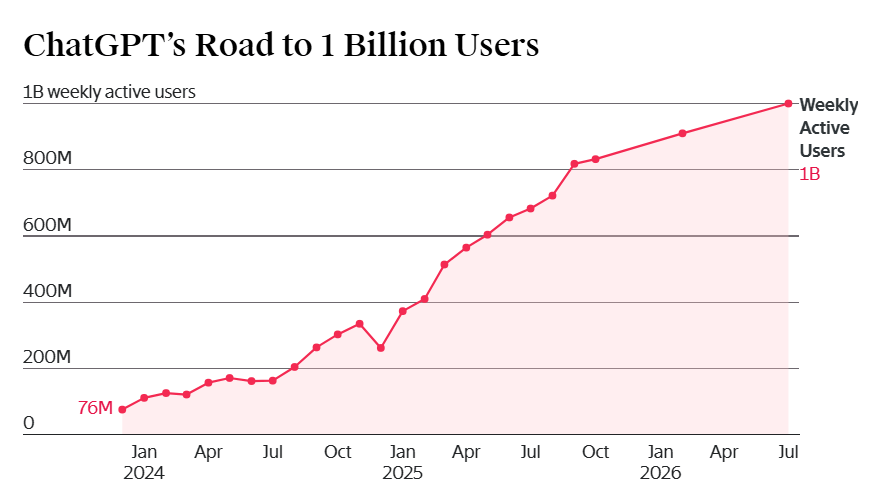
### **OpenAI: **OpenAI’s ChatGPT Nears 1 Billion Weekly Active Users Seven Months After Target - [TheInformation](https://www.theinformation.com/articles/openais-chatgpt-nears-1-billion-weekly-active-users-seven-months-target?utm_campaign=article_email&utm_content=article-17537&utm_medium=email&utm_source=sg&rc=h3on51)
### **SNOW: Wells Fargo Raises PT to $500 as AI Agents Drive a Scarce, Capex-Light Growth Reacceleration**
Wells Fargo raises its price target to $500 from $320, applying a 23x CY27 multiple versus 14.5x previously, and argues SNOW deserves to trade closer to NET and CRWD if product revenue growth exits FY27 in the mid- to high-30% range. Wells Fargo says AI agents are increasing token consumption inside Snowflake, while accelerating survey, download and hiring data support a broader infrastructure inflection. Wells Fargo estimates AI inference could add roughly four points of annual growth during FY27–30 and says SNOW offers rare AI upside without the capex burden or model-lab risk facing other beneficiaries.
### **RDDT: Initiated Overweight with $225 PT on Durable 30%+ Growth and AI Data Upside**
The firm initiates RDDT at Overweight with a $225 price target, arguing Reddit’s community moat, improving ad monetization and growing value to LLMs can sustain more than 30% annual revenue growth and drive EBITDA margin toward 50%. The firm models a 35% revenue CAGR from 2025–28 and roughly 48% annual EBITDA growth, supported by DAU expansion, commercial-intent traffic and broader advertiser adoption. The firm also views Reddit’s trusted, contextual content as an increasingly valuable input for AI citations and model training, creating a potential 2027 upside catalyst within an asset-light, high-conversion business model.
### **AMZN: Hearing Yipit at 40%+ for AWS growth in Q3**
### **APP/U: Hearing Edge saying APP gaming reads mixed with customers impacted by elevated CPMs while they raise U’s numbers (mid teens growth q/q) on cleaner growth led by D28 campaigns**
### **TXN: Arete Upgrades to Buy as AI Demand Could Drive a Multi-Year Analog Shortage**
Arete upgraded TXN to Buy from Neutral with a $405 price target, arguing AI-driven supply absorption could create three years of analog semiconductor shortages. Arete says TXN is among the best positioned from a capacity standpoint, which should enable material share gains as competitors remain supply constrained. Arete forecasts revenue reaching $34B in FY28 with EPS of $17, implying a significantly stronger earnings trajectory as the analog cycle tightens.
### **AAPL: BofA Says Apple Upgrade Could Accelerate Replacement Cycles and Capture Residual Value**
BofA reiterates Buy and a $380 price target, saying Apple Upgrade is directionally positive because it extends leasing across iPhone, Apple Watch, Mac and iPad through 12- to 36-month terms. BofA notes the mechanics are not entirely new, but says the broader platform could pull forward new-device transactions, shorten upgrade cycles and bring hardware residual value that previously remained with customers into Apple’s managed ecosystem.
### **HUBS: BofA Stays Underperform as Mixed Checks Fail to Support the 2026 Reacceleration Case**
BofA reiterates Underperform but raises its price objective to $210 from $180 on peer multiple expansion, saying recent channel checks showed no clear inflection in demand or AI-agent monetization. BofA believes HUBS needs a beat-and-raise with full pass-through of 2Q upside to support the stock after its recent rally, while a “beat and keep” outcome is more likely. BofA says NARR reaccelerating above constant-currency revenue growth would be the key upside catalyst, but warns that any shift in AI monetization expectations toward 2027 would further weaken the near-term bull case.
### **SHOP: Benchmark Reiterates Buy and $145 PT as a Lower Near-Term Bar Meets a Widening Commerce Moat**
Benchmark reiterates Buy and a $145 price target, modeling 2Q revenue of $3.45B and GMV of $111.2B while noting expectations have reset after softer guidance. Benchmark says investor focus should center on FCF, with 2026 FCF margin modeled at 16.8%, and on whether management reinvests in AI infrastructure and marketing following the expanded $5B buyback. Benchmark also argues Shopify’s moat is widening through integrations with ChatGPT, Reddit, DoorDash, Pinterest and Microsoft, which expand merchant distribution while preserving SHOP’s control of catalog, checkout, billing and inventory.
### **PINS: Guggenheim Says Measurement Improvements Support a Constructive 2Q and Continued Recovery**
Guggenheim expects a constructive 2Q, modeling revenue of $1.148B, +15% y/y, and adjusted EBITDA of $267M versus guidance of $256M–$276M, as improving measurement and Performance+ adoption support stronger advertiser spending. Guggenheim says Pathmatics data suggest spend and impressions stabilized during 2Q, while better attribution for larger UCAN advertisers should help budgets recover despite META and GOOGL retaining advantages in automation and product velocity.
### **TWLO: UBS Stays Constructive as Voice AI Adoption Accelerates and Core Messaging Remains Healthy**
UBS says its checks point to stable-to-improving CPaaS demand, with conversational AI, higher AI-triggered communications volumes and channel consolidation supporting 15%–16% ex-A2P fee revenue growth in 2Q and a potential FY26 guide increase to roughly 12% from 10%. UBS says Voice is the clearest upside driver, with some partners reporting 20%–25% volume growth and branded calling spend potentially rising 20%–30%, while Messaging remains healthy despite tougher comparisons. UBS notes the stock’s 31% post-earnings rally and 22x CY27 FCF multiple make the setup more demanding, but says durable mid-teens growth remains achievable.
### **GFS: GlobalFoundries signs letter of intent with the U.S. Department of Commerce for a $300 million award to accelerate U.S. silicon photonics leadership**
Lots of earnings to go through. We’ll cover **STX, Hynix, KLAC, NXPI, VRT, and CTSH** then the usual below that. We’ll put our recap of BE in the slack since we’re running out of time here…
**META** and **MSFT** tonight among others. We’ll have some bogeys out shortly.

Let’s get straight to it…

# **EARNINGS**
### **STX +4%: Big beat-and-raise, with pricing, mix and HAMR cost-downs driving a much larger-than-expected margin step-up, while demand visibility extended into CY28 and customer planning moved into CY29+**
Overall very solid print with the highlight the implied mid 57s September GM guide. We know what kind of tape we’re in but numbers objectively good and mgmt did good job talking up visibility/pricing/incremental margins. Will be interesting to see how it goes today.
### **The #s:**
-
**FQ4’26 revenue **was $3.629B, +48.5% y/y (last q +44.1% y/y) vs Street $3.49B, +~42.8%; non-GAAP EPS was $5.71 vs Street $5.08-$5.10; GM was 52.7% vs ~50.3%; and OM was 44.6% vs ~42.0%.
-
**FQ1’27 guidance **was $4.10B revenue, +56.0% y/y vs Street $3.78-$3.79B, and EPS of $7.30 vs Street $5.80-$5.85 and a roughly $7.00 buyside bogey. Implied September GM of ~57.3%-57.5%…The magnitude of the EPS upside came from the combination of another pricing increase, a higher-capacity product mix, HAMR cost-downs and opex remaining near $300M despite 13% sequential revenue growth
### **Key Takeaways:**
-
**Pricing**: Nearline pricing increased roughly 10% y/y, accelerating from approximately 6% last quarter, while Edge pricing increased roughly 35% y/y. Mgmt said the supply-demand gap has widened, and any incremental exabytes produced above contracted volumes are being sold at prices above the original contract price. The favorable pricing expiration for one early HAMR customer was only a small contributor to the September improvement, with broader demand and customers chasing incremental volume the more important drivers.
-
**GMs:** GM reached 52.7%, +570bps q/q and nearly 15 points y/y, while the September guide implies ~57.3%-57.5%. Estimated incremental GM was roughly 87% in June and 93% in September, far above the 50% framework previously discussed. Pricing, cost per TB declining by roughly 16% y/y, higher-capacity drives and limited opex growth are translating revenue upside almost directly into earnings. Mgmt said GM should improve sequentially through FY27 and that incremental GM is already well above 60%, but explicitly declined to identify a ceiling.
-
**Visibility**: Approximately 90% of exabytes now ship into data centers, the vast majority of nearline supply is allocated into CY28, and customers are discussing CY29 and beyond. Product configurations and pricing are already contracted through the entirety of CY27. Mgmt said cloud exabyte demand has increased sequentially for three years with “no evidence of a slowdown,” while enterprise nearline revenue increased for a fifth consecutive quarter.
-
**Demand**: Mgmt argued that inference and agentic workloads create and retain more context, with tiered KV-cache architectures allowing HDDs to hold persistent data and reduce repeated GPU computation. Neoclouds, leading model developers and enterprises are also starting to adopt hyperscaler-style tiered architectures. However, mgmt repeatedly characterized agentic KV-cache and physical-AI demand as “very early days,” and said the ultimate HDD attach rate will vary significantly by application.
-
**HAMR: **HAMR represented approximately 40% of nearline exabytes exiting FY26. Mozaic 3 is qualified across all major cloud customers, Mozaic 4 is ramping at the two largest global CSPs and should represent 50% of HAMR exabytes exiting CY26, while Mozaic 5 qualification shipments remain targeted for late CY27. Mozaic 4 was already a meaningful contributor in June and is expected to contribute more in September.
-
**Capital Return:** FCF was $1.118B, a 31% margin and the best quarterly result in more than a decade. Gross debt declined to $3.6B, STX plans to retire another $1.2B during the September quarter, and buybacks are already running above the June-quarter level. Once the remaining targeted debt is addressed, mgmt expects most excess FCF to be returned through repurchases and dividends.
### **Bull vs. Bear Debate**
**The structural bull case** is that STX is no longer simply a cyclical PC-HDD vendor. The business is becoming a concentrated provider of mass-capacity storage into a rational cloud-HDD market, where HDD remains dramatically less expensive than NAND for bulk storage. Approximately 90% of exabytes already ship into data centers, HDD represents a relatively small portion of total hyperscaler capex, and AI is increasing the amount of data that is created, retained, duplicated and reused. Bulls argue that this makes storage demand more durable than compute capex alone, particularly as inference, agentic AI, video and physical AI increase persistent context and unstructured-data requirements. Bulls like bisibility and supply discipline: the vast majority of nearline exabytes are allocated into CY28, pricing and product configurations are contracted through CY27, and customers are already discussing CY29+ with most checks showing $25-$30/TB already in CY27 which implies $70+ in EPS power. STX is keeping drive-unit output broadly stable and using areal-density gains to increase exabytes, which limits industry oversupply while allowing incremental production to be sold above contracted prices. Bulls therefore believe that the traditional HDD cycle has structurally changed: rather than price per TB falling every year, the industry can capture part of the value created by higher-capacity products while HAMR lowers cost per TB.
This quarter the September guide cleared the buyside bogey, Edge pricing showed the same positive inflection as nearline, incremental GM approached 90%, and Mozaic 4 is now contributing meaningfully. Opex remains near $300M even as revenue approaches $4.1B, creating unusually high earnings leverage. With debt rapidly declining, the next leg of FCF can increasingly fund buybacks, allowing EPS to grow faster than operating profit. Bulls will say this should trade at least mid teens multiple and with pricing reaching $30/TB by 2028, you can get $100+ in EPS power = a $1,500 stock.
**The bear case** is that the market may be capitalizing peak pricing and peak incremental margins as though they are permanent. Customer commitments reduce near-term miss risk, but they do not eliminate a CY28 or CY29 cloud-capex slowdown. If hyperscaler infrastructure spending moderates, open-source models reduce the capital intensity of AI, DC construction encounters power or financing constraints, or customers eventually discover they have accumulated too much storage capacity, pricing can flatten before unit demand visibly falls. The same customer concentration that provides visibility can create a sharp correction when LTAs eventually roll off.
There are also technology and competitive risks. STX must pause or slow parts of its factories during transitions from 3TB to 4TB and eventually 5TB per disk, while yields, qualification timing and more complex head-and-media processing can temporarily constrain output or raise costs. Mgmt also acknowledged that areal-density transitions alone may not be sufficient to meet all longer-term demand. A slower Mozaic ramp would remove both the expected capacity benefit and part of the cost-down benefit. Beyond HAMR execution, a return to NAND deflation could improve SSD economics, WDC or Toshiba could become more aggressive, and weaker Edge or consumer markets could expose fixed-cost leverage. The margin debate is particularly important because the September guide has already moved GM close to 60%. If pricing normalizes while costs continue declining at only the historical low-to-mid-teens rate, incremental GM could fall sharply from the current 80%-90% level. Opex leverage would still be favorable, but the market would begin treating STX as a late-cycle hardware company again.
### **SKHY -2%: Hynix results ok as OP expectations had already come down in Asia give mgmt setting expectations lower, but the quarter was also modest quality miss as DRAM ASP and product mix lagged buyside expects; HBM4, LTAs and continued AI-memory tightness support a stronger 2H setup.**
**Revenue** was ₩79.319tn, +257% y/y (last q +198% y/y) vs Street at₩79.964tn+~279% y/y, while OP was ₩60.543tn, +557% y/y vs Street at ₩64.986tn, +~605% y/y; OPM was 76.3% vs 77.1%. A lot of discussion where real bogey was - I couldn’t get a sense before the print, but remember that mgmt was out trying to massage expectations down a few weeks ago so many already expected the OP miss:

DRAM ASP of only +~30% q/q vs a higher-end +40%+ expectation. NAND was stronger, with bits +mid-teens and ASP +mid-50s; eSSD revenue doubled q/q and 30TB+ eSSD revenue more than tripled. For 3Q, mgmt guided DRAM bits +~10% q/q and NAND bits up low-single digits; no formal P&L guide was provided, while Street is at ₩105.0tn revenue, ₩83.0tn OP and 79.0% OPM.
Mixed feedback from investors on the call especially around Samsung production plans, and some pointing to fact they can’t accelerate buybacks due to ADR listing until next year. They did say 2H pricing should be better as Q2 impacted by some pushouts of higher value products. Overall, seems fine especially given stock down 40% from peak already.
### **Key Takeaways:**
-
**DRAM:** Blended DRAM ASP rose only ~30% q/q versus a higher-end expectation of +42.6%, despite conventional DRAM pricing remaining strong. The shortfall reflected higher exposure to lower-priced mobile DRAM, some fixed LTA pricing, legacy HBM3E mix and higher-value HBM4 shipments landing later in the quarter.
-
**2H improves:** HBM4 entered mass production in 2Q, with a full ramp planned for 2H, while HBM4 yield and quality are already nearing mature HBM3E levels. Mgmt expects HBM4, 1c conventional DRAM and a greater contribution from higher-value products to drive higher 2H bit growth, blended ASP and earnings.
-
**Demand**: More efficient models and data-center leasing were characterized as signs of higher infrastructure utilization and faster monetization, not weaker investment. Mgmt expects CSP AI spending to remain solid beyond next year, although individual projects can move because of power availability and data-center construction constraints. Demand is broadening from HBM into server DRAM, LPDDR/SOCAMM and high-capacity NAND as agentic AI and inference expand.
-
Major customers continue requesting more memory, and mgmt sees 2026 DRAM and NAND demand growing mid-20% and high-teens, respectively. PC and mobile are seeing temporary sales adjustments because customers cannot secure enough memory, rather than because of an underlying demand collapse. Advanced-node complexity and long fab lead times make a meaningful near-term supply-demand improvement unlikely.
-
**Capex**: 2026 capex is expected in the high-₩40tn range, with M15X production pulled forward and Yongin Fab 1 capacity expansion accelerated. New packaging and NAND investments will be phased based on confirmed customer demand and investment efficiency. This supports the bull case on sustained shortages, but it also increases the bear debate around eventual 2027-29 supply normalization
-
**LTAs: **SKHY has completed negotiations with around 10 customers, with additional discussions underway. Contracts are typically around five years and can include volume commitments, variable pricing mechanisms and deposits, improving demand and investment visibility
-
**NAND**: eSSD revenue doubled q/q, with revenue from 30TB+ products rising more than threefold. Mgmt sees NAND becoming a core component of the AI memory hierarchy as inference, KV-cache offloading, near-GPU storage and AI data lakes require a mix of high-performance TLC, high-capacity QLC and SLC-mode products.
### **Bull vs Bear Debate**
**The core bull thesis** is that AI has permanently changed the size, mix and cyclicality of the memory market. AI demand is no longer confined to HBM for training accelerators. Agentic AI and inference require more conventional server DRAM, LPDDR/SOCAMM for CPU and accelerator nodes, and high-capacity NAND for KV cache, near-GPU storage and data retention. At the same time, nearly all incremental DRAM wafer capacity is being directed toward HBM, while limited non-China NAND capacity is being added. That combination could keep supply tight even as capex rises.
The SKHY-specific bull case is that it retains a differentiated execution moat rather than simply participating in a commodity upcycle. HBM4 entered mass production in 2Q, yields and quality are already approaching mature HBM3E levels, HBM4E is on track for 2027 and mgmt is developing next-generation packaging and cooling technology. The quarter also provided evidence of demand broadening into NAND, with eSSD revenue doubling q/q. Around 10 multiyear LTAs, generally structured around five-year terms with commitments and deposits, should make demand, capex and cash flow more visible. If those agreements reduce downside volatility without materially limiting HBM pricing, SKHY can earn a structurally higher ROE and deserves a higher multiple than a traditional peak-cycle memory stock.
The balance sheet and capital-return opportunity further strengthen the bull case. SKHY has moved into a substantial net-cash position and expects to disclose additional shareholder returns this year. Some estimates anticipate hundreds of trillions of won of FCF through 2028 and eventual use of both dividends and buybacks. A credible recurring buyback would help close the gap between strong earnings generation and the low multiple currently assigned to those earnings.
### **NXPI -3%: Clean but modest beat-and-raise, with Q2 revenue and EPS above Street and Q3 revenue and EPS guided ahead, but Auto was roughly in line and Q3 gross margin was slightly below Street**
Relatively unexciting print that won’t change narrative…
### **The #s:**
-
**Q2 revenue** was $3.496B, +19.5% y/y (last q +12.2% y/y) vs Street $3.463B, +18.4%, while non-GAAP EPS was $3.61 vs Street $3.54. Gross margin was in line at 58.0%, while operating margin beat by 40 bps at 35.1%.
-
**Q3 revenue** was guided to $3.750B, +18.2% y/y and +7.3% q/q, vs Street $3.706B, +16.8%, while EPS was guided to $4.11 vs Street $4.01. Gross margin of 58.5% was 10 bps below Street, but operating margin of 36.9% was roughly 60 bps above.
-
Industrial & IoT and Communications Infrastructure drove most of the upside, while Auto and Mobile were only slightly above Street. Demand indicators nevertheless improved meaningfully, with growing backlog, book-to-bill above 1, longer lead times, doubled customer escalations, and visibility extending into Q4 and Q1’27
### **Key Takeaways:**
-
**Demand: **Mgmt said the setup was better than 90 days ago, with backlog building across the next three quarters, an 18-month demand signal, distribution backlog improving, book-to-bill above 1 and higher q/q, late orders continuing to rise, and customer escalations doubling q/q. Lead times have moved beyond 16 weeks across a larger portion of the portfolio, while Q3 assumes all regions and end markets grow sequentially.
-
**GMs:** Q3 gross margin is guided 50 bps higher q/q as utilization moves from the low-80% range toward the mid-80% range. Mgmt reiterated that roughly $1B of incremental annual revenue should add about 100 bps to gross margin and maintained confidence in the approximately 60% CY27 framework. The longer-term VSMC and factory-consolidation benefits offer roughly 200 bps of structural upside, but those benefits are mainly a 2028-29 event
-
**Auto**: Auto revenue was $1.938B, +12.1% y/y and +17% excluding the MEMS disposal, in lineish . Company-specific Auto drivers grew 22% y/y and reached 47% of segment revenue, led by SDV, electrification, and connectivity. Mgmt was emphatic that Western Tier-1 customers remain hand-to-mouth and are not restocking, meaning current growth is coming from content rather than inventory replenishment. Bulls see better revenue quality and future restocking upside; bears see less evidence of a broad cyclical Auto recovery.
-
**Industrial: **Industrial & IoT revenue was $755M, +38.3% y/y vs Street $744M, with new i.MX, RT, and MCX products growing approximately 40% and core Industrial also recovering strongly. Communications Infrastructure was $452M, +41.3% y/y vs Street $437M, driven by data-center networking and RFID.
-
**Physical AI:** AI-enabled processors are expected to represent approximately 15% of Industrial & IoT processor revenue in 2026, more than doubling y/y. The Kinara-related funnel rose to more than $1.5B from more than $1B last quarter and now spans over 200 customers. Mgmt characterized AI as becoming a required component of new edge-system design discussions, but explicitly acknowledged that the funnel must still convert into design wins
-
**DC: ** Mgmt reiterated more than $500M of 2026 revenue vs approximately $200M in 2025, with exposure to top-of-rack and SmartNIC control as well as processors that manage power, cooling, monitoring, security, and uptime within the rack. Still only roughly 3.5% of 2026 revenue, well below the AI DC mix of other analogs.
### **Bull vs. Bear Debate**
**The core bull argument** is that NXPI is increasingly a structural content-growth company rather than simply a leveraged play on Auto and Industrial unit cycles. This quarter strengthened that case. Auto grew 17% y/y excluding MEMS even though mgmt saw no restocking, and company-specific Auto drivers grew 22% to reach 47% of segment revenue. SDV is the fastest-growing part of that portfolio, while the S32N and S32K5 product families remain in the design-win phase and have not begun material production ramps. If those platforms convert as expected, NXPI can continue growing Auto revenue faster than vehicle production through higher processing, networking, security, radar, and electrification content per vehicle.
The bull case also now has broader support outside Auto. Industrial & IoT grew 38%, with both the new processing portfolio and the core franchise expanding strongly. Data-center revenue is expected to rise from approximately $200M in 2025 to more than $500M in 2026, while the physical-AI funnel expanded by approximately $500M q/q to more than $1.5B across over 200 customers. At the same time, backlog, lead times, book-to-bill, late orders, and customer escalations all improved. The absence of restocking can actually be viewed positively because it suggests existing growth is tied to real end demand and content, while any future inventory normalization remains an additional source of upside. The margin and cash-flow setup adds operating leverage. Utilization is moving toward the mid-80% range, every incremental $1B of revenue should contribute approximately 100 bps of gross margin, and lower-cost JV capacity and factory consolidation can add another roughly 200 bps structurally over time. Bulls can therefore underwrite faster EPS growth than revenue growth while NXPI’s capital intensity normalizes and JV funding requirements decline.
**The bear argument** starts with the fact that the q did not produce the magnitude of upside expected from a stock trading on an analog recovery and content-growth narrative. Q2 revenue was only approximately 1% above Street, Q3 revenue was inl ine, and Q3 gross margin was slightly below Street. Auto, the largest segment, was essentially in line with expectations, while the sequential guide was not materially better than normal seasonality. Bulls looking for an accelerated cyclical recovery, restocking, or a larger upward revision to CY27 estimates did not receive it.
Bears also argue that the newer AI businesses are not yet large enough to offset the risks in the core portfolio. DC is growing rapidly but represents only around 3.5% of 2026 sales, materially below the 10% to 20% AI data-center exposure of several peers. The $1.5B physical-AI funnel is an engagement pipeline, not booked revenue, and mgmt explicitly said it still must convert into design wins. Industrial programs may take 18 to 24 months to generate revenue after a win, while Auto programs generally take even longer. Meanwhile, NXPI remains heavily exposed to global Auto demand, Mobile is turning negative y/y due partly to memory constraints, and pricing is currently offsetting inflation rather than adding meaningful incremental margin.
There are also questions about the quality and timing of the margin story. Utilization can lift gross margin toward 60%, but foundry and access-fee inflation becomes more relevant in 2027, and the larger structural JV benefit is mainly a 2028-29 event. DCD margins in the low-20% range remain below several analog peers at 30% to 35%, limiting the case for a peer-level multiple before JV spending declines and cash conversion improves.
### **KLAC -8%: Solid but modest beat-and-raise with a meaningfully stronger 2H26/CY27 setup, but print didn’t clear elevated bogeys as Q4/Q1 revs a touch light of expects and bulls wanted better pricing commentary. Buyside EPS coming down MSD.**
### **The #s:**
-
**F4Q26:** Revenue $3.658B, +15.2% y/y (last q +11.5% y/y) vs Street $3.600B although a bit light of buyside at $3.7B, +~13.4%; non-GAAP EPS $1.05 vs Street $1.00; non-GAAP GM 62.4% vs Street 61.9%.
-
**F1Q27 guide:** Revenue $4.00B, +24.6% y/y vs Street ~$3.94B and buyside hoping for $4B+, +~22.8%; EPS $1.16 vs Street ~$1.10-$1.14; GM 62.5% vs Street ~62.1%.
-
Mgmt expects 2H26 revenue to rise ~20% versus 1H26, implying Dec-Q revenue of roughly $4.49B, +~36% y/y versus Street around $4.3-$4.4B. CY26 WFE was raised to the low-$150B range, while CY27 is framed around ~$190B vs buyside expectations closer to $200B. Mgmt said first-half shipments were constrained by long-lead components rather than customer demand, and those constraints are easing.
### **Key Takeaways:**
-
**Demand**: Mgmt said AI infrastructure demand signals have “strengthened materially” since the March Investor Day, supported by accelerating hyperscale data-center investment, rising AI compute requirements and a robust design environment. Customer schedules are holding, greenfield projects are progressing, and customers are accelerating delivery requests. KLAC did not discuss conventional enterprise IT budgets directly; the relevant IT-spend signal was hyperscaler and AI infrastructure capex, which remains very strong.
-
**Margins:** GM of 62.4% exceeded Street despite tariff and memory-cost pressure, and the 62.5% September guide was also above Street. However, the memory-component headwind is now slightly greater than 100 bps and is expected to persist through CY27. Mgmt generally does not reopen previously booked orders or impose retroactive surcharges; most pricing capture comes with new products and variants. A bit of disappointment for bulls expecting broad 10%-15% like-for-like equipment-price increase
-
CY26 WFE, including advanced packaging, was raised to the low-$150B range from more than $140B previously, implying mid-to-high-20% growth from approximately $120B in CY25. Mgmt framed CY27 around $190B, or another mid-20% growth year, while buyside expectations were already closer to $200B and some sell-side forecasts are above $210B
-
CY26 advanced-packaging process-control revenue is now expected to reach approximately $1.1B, up more than 70% y/y versus prior expectations for high-50% growth, and nearly twice the growth of the overall market. The market itself is now expected to grow in the mid-to-high-30% range versus roughly 20% at the beginning of the year. Share gains are being driven by front-end inspection and metrology tools moving into CoWoS, SoIC and hybrid-bonding applications; SoIC wafer starts could potentially increase roughly 4x in CY27.
-
Specialty semiconductor, PCB and component-inspection businesses are expected to grow more than 25% in CY26 as higher-value AI packages require more sophisticated substrates and high-density PCBs. PCB product revenue nearly doubled y/y in the quarter. Mgmt said this business turned faster than expected and could have shipped more, suggesting upside is currently capacity-limited.
### **Bull vs. Bear Debate:**
**The structural bull case** is that KLAC is not simply a cyclical WFE supplier. It owns the highest-value portion of process control, where the combination of optical systems, algorithms, application expertise and deep integration with customer yield-learning workflows creates a durable moat. Process control has risen from approximately 12% of WFE in CY19 to 15% in CY25 as device complexity, wafer value and leading-edge spending have increased. AI strengthens each of those drivers: larger dies, more customized designs, more EUV layers, HBM, hybrid bonding and increasingly complex packaging all increase the economic cost of defects and therefore the value of inspection and metrology.
This quarter materially strengthened that thesis. Demand visibility improved, CY26 WFE was raised, backlog reached approximately $12.5B and increased roughly 60% versus the prior fiscal year-end, and mgmt is already arranging supplier capacity for 2029 and beyond. The fact that first-half revenue would have been higher without supply constraints suggests reported revenue understates underlying demand. Advanced packaging was also raised to $1.1B and more than 70% growth, while the broader Orbotech portfolio is beginning to participate directly in AI package and substrate complexity. The bull interpretation is that KLAC is entering the steepest portion of the cycle just as its own capacity limitations begin to ease.
The CY27 mix may also be better for KLAC than CY26. Spending is broadening beyond one leading-edge foundry leader to additional logic customers, while greenfield DRAM, HBM, NAND, A14, advanced packaging and higher design-start activity should all carry attractive process-control intensity. Mgmt also believes KLAC performs better later in node ramps and during conventional memory upgrades than it did historically. That gives bulls confidence that KLAC can move from roughly in-line WFE systems growth in CY26 to WFE outgrowth in CY27 and beyond.
**The bear case** begins with expectations and cyclicality. KLAC already traded mid-30s P/E before the print and carried a premium to AMAT, LRCX, ASML and its own mid-20s historical multiple. So the misses vs bogeys not enough. Investors need sustained upward revisions, clear WFE outgrowth and margin expansion. This quarter delivered only a roughly 1%-2% revenue beat and guide, and mgmt’s approximately $190B CY27 WFE view was below buyside expectations around $200B and well below more aggressive forecasts above $210B.
The relative-growth issue is not fully resolved. Total CY26 KLAC revenue is implied to grow roughly 22% versus WFE in the mid-to-high 20s and peer growth commentary closer to 30%+. Mgmt attributes the difference to first-half supply constraints and the dilution from slower-growing services, but bears can argue that companies with the strongest demand and execution should already be showing more upside. KLAC also has less exposure to memory than some peers at a time when memory could be the fastest-growing portion of WFE. If leading-edge logic spending pauses or greenfield projects are delayed, KLAC’s premium growth narrative could weaken even while industry WFE remains healthy.
Margins present another nit for bears. The memory-cost headwind is now greater than 100 bps and may persist through CY27. Mgmt is unwilling to reopen booked orders and expects most price realization to arrive through new products. That means revenue can accelerate sharply without a commensurate near-term GM increase. Services are strategically valuable but carry lower GM than systems, while continued capacity, inventory, R&D and support investments raise the operating-risk profile if customer spending slows. China localization, export restrictions and eventual WFE digestion remain additional risks.
### **VRT -12%: Q2 EPS/margin beat, but revenue and Americas growth missed; FY26 outlook raised…call ongoing**
Despite the FY raise, the Q2 sales miss and weaker Americas execution are likely to weigh on the stock, with investor focus shifting to project timing and the pace of backlog conversion. Q2 revenue was $3.27B, +18% organic, versus Street at $3.39B, while adjusted EPS was $1.52 vs Street $1.43 and adjusted operating margin was 22.6% vs 21.6% expected, up 410 bps y/y. The revenue shortfall was concentrated in the Americas, where organic growth of 21% came in below expectations of 34.5% and prior guidance for low-30% growth, which mgmt attributed to temporary supply-chain congestion and project-execution timing.
Mgmt continues to describe the DC pipeline as robust and maintained its expectation for high-30% Americas organic growth for FY26, making backlog conversion and project execution the key focus from here.
**Q3 revenue guide:** $3.75B midpoint vs Street $3.71B
**Q3 adjusted EPS guide:** $1.80 vs Street $1.79
**Q3 operating margin guide:** 24.5% vs Street 24.7%
**FY26 revenue guide:** $14.0B midpoint vs Street $13.88B
**FY26 organic growth guide:** 31% vs prior 29–31%
**FY26 adjusted EPS guide:** $6.70 midpoint vs Street $6.48
### **CTSH -1%: Q2 broadly in line, but weaker bookings and a light Q3 guide offset the higher FY26 EPS outlook**
Q2 revenue and EPS were essentially in line, with margin and FCF modestly better. However, bookings declined 6% y/y, and the below-Street Q3 revenue guide is likely to reinforce concerns around the pace of demand acceleration despite mgmt narrowing FY26 revenue guidance and raising EPS.
**Q2 revenue:** $5.48B vs Street $5.49B
**Q2 adjusted EPS:** $1.37 vs Street $1.38
**Q2 bookings:** -6% y/y
**Q3 revenue guide:** $5.60–5.68B; midpoint $5.64B vs Street $5.70B
**FY26 revenue guide:** $22.04–22.35B; midpoint $22.20B vs Street $22.29B
**FY26 adjusted EPS guide:** $5.70–5.82; midpoint $5.76 vs Street $5.70
# **TECH RESEARCH/NEWS:**
### **OpenAI: **OpenAI’s ChatGPT Nears 1 Billion Weekly Active Users Seven Months After Target - [TheInformation](https://www.theinformation.com/articles/openais-chatgpt-nears-1-billion-weekly-active-users-seven-months-target?utm_campaign=article_email&utm_content=article-17537&utm_medium=email&utm_source=sg&rc=h3on51)

### **SNOW: Wells Fargo Raises PT to $500 as AI Agents Drive a Scarce, Capex-Light Growth Reacceleration**
Wells Fargo raises its price target to $500 from $320, applying a 23x CY27 multiple versus 14.5x previously, and argues SNOW deserves to trade closer to NET and CRWD if product revenue growth exits FY27 in the mid- to high-30% range. Wells Fargo says AI agents are increasing token consumption inside Snowflake, while accelerating survey, download and hiring data support a broader infrastructure inflection. Wells Fargo estimates AI inference could add roughly four points of annual growth during FY27–30 and says SNOW offers rare AI upside without the capex burden or model-lab risk facing other beneficiaries.
### **RDDT: Initiated Overweight with $225 PT on Durable 30%+ Growth and AI Data Upside**
The firm initiates RDDT at Overweight with a $225 price target, arguing Reddit’s community moat, improving ad monetization and growing value to LLMs can sustain more than 30% annual revenue growth and drive EBITDA margin toward 50%. The firm models a 35% revenue CAGR from 2025–28 and roughly 48% annual EBITDA growth, supported by DAU expansion, commercial-intent traffic and broader advertiser adoption. The firm also views Reddit’s trusted, contextual content as an increasingly valuable input for AI citations and model training, creating a potential 2027 upside catalyst within an asset-light, high-conversion business model.
### **AMZN: Hearing Yipit at 40%+ for AWS growth in Q3**
### **APP/U: Hearing Edge saying APP gaming reads mixed with customers impacted by elevated CPMs while they raise U’s numbers (mid teens growth q/q) on cleaner growth led by D28 campaigns**
### **TXN: Arete Upgrades to Buy as AI Demand Could Drive a Multi-Year Analog Shortage**
Arete upgraded TXN to Buy from Neutral with a $405 price target, arguing AI-driven supply absorption could create three years of analog semiconductor shortages. Arete says TXN is among the best positioned from a capacity standpoint, which should enable material share gains as competitors remain supply constrained. Arete forecasts revenue reaching $34B in FY28 with EPS of $17, implying a significantly stronger earnings trajectory as the analog cycle tightens.
### **AAPL: BofA Says Apple Upgrade Could Accelerate Replacement Cycles and Capture Residual Value**
BofA reiterates Buy and a $380 price target, saying Apple Upgrade is directionally positive because it extends leasing across iPhone, Apple Watch, Mac and iPad through 12- to 36-month terms. BofA notes the mechanics are not entirely new, but says the broader platform could pull forward new-device transactions, shorten upgrade cycles and bring hardware residual value that previously remained with customers into Apple’s managed ecosystem.
### **HUBS: BofA Stays Underperform as Mixed Checks Fail to Support the 2026 Reacceleration Case**
BofA reiterates Underperform but raises its price objective to $210 from $180 on peer multiple expansion, saying recent channel checks showed no clear inflection in demand or AI-agent monetization. BofA believes HUBS needs a beat-and-raise with full pass-through of 2Q upside to support the stock after its recent rally, while a “beat and keep” outcome is more likely. BofA says NARR reaccelerating above constant-currency revenue growth would be the key upside catalyst, but warns that any shift in AI monetization expectations toward 2027 would further weaken the near-term bull case.
### **SHOP: Benchmark Reiterates Buy and $145 PT as a Lower Near-Term Bar Meets a Widening Commerce Moat**
Benchmark reiterates Buy and a $145 price target, modeling 2Q revenue of $3.45B and GMV of $111.2B while noting expectations have reset after softer guidance. Benchmark says investor focus should center on FCF, with 2026 FCF margin modeled at 16.8%, and on whether management reinvests in AI infrastructure and marketing following the expanded $5B buyback. Benchmark also argues Shopify’s moat is widening through integrations with ChatGPT, Reddit, DoorDash, Pinterest and Microsoft, which expand merchant distribution while preserving SHOP’s control of catalog, checkout, billing and inventory.
### **PINS: Guggenheim Says Measurement Improvements Support a Constructive 2Q and Continued Recovery**
Guggenheim expects a constructive 2Q, modeling revenue of $1.148B, +15% y/y, and adjusted EBITDA of $267M versus guidance of $256M–$276M, as improving measurement and Performance+ adoption support stronger advertiser spending. Guggenheim says Pathmatics data suggest spend and impressions stabilized during 2Q, while better attribution for larger UCAN advertisers should help budgets recover despite META and GOOGL retaining advantages in automation and product velocity.
### **TWLO: UBS Stays Constructive as Voice AI Adoption Accelerates and Core Messaging Remains Healthy**
UBS says its checks point to stable-to-improving CPaaS demand, with conversational AI, higher AI-triggered communications volumes and channel consolidation supporting 15%–16% ex-A2P fee revenue growth in 2Q and a potential FY26 guide increase to roughly 12% from 10%. UBS says Voice is the clearest upside driver, with some partners reporting 20%–25% volume growth and branded calling spend potentially rising 20%–30%, while Messaging remains healthy despite tougher comparisons. UBS notes the stock’s 31% post-earnings rally and 22x CY27 FCF multiple make the setup more demanding, but says durable mid-teens growth remains achievable.
### **GFS: GlobalFoundries signs letter of intent with the U.S. Department of Commerce for a $300 million award to accelerate U.S. silicon photonics leadership**
决策记录链 · 只追加
每次领取产生一条记录,重新决策追加一条并以 supersedes 指向被替代的记录(ADR 0014)。
这条决策早于决策账本(2026-10-08 起逐条追加),没有追加记录。